Afro-Cuban music explained: rumba, bata drums, guaguanco and the roots under everything else
The Afro-Cuban foundations: rumba and its three forms, the bata drum trio, guaguanco and columbia, the six eight bell, and how these traditions feed salsa, timba and Latin jazz.
Afro-Cuban music is the body of tradition that salsa, mambo, timba and Latin jazz all draw from. Its core is rumba, a voice and percussion form with no melody instruments, and the sacred bata drum repertoire. Both are organised around a bell pattern and a clave, and both are played in cycles rather than in songs with an ending.
What the term covers
Afro-Cuban is a broad label for the music that came out of the encounter between West and Central African traditions carried to Cuba during slavery and the Spanish musical culture already on the island. It is not a genre so much as a source. Under it sit sacred repertoires tied to religious practice, secular street forms such as rumba and comparsa, and the popular dance music that grew out of both.
Two things stay constant across almost all of it. First, a timeline: a bell or stick pattern that repeats without variation and against which everything else is measured. Second, a conversational structure: a lead drum or lead voice that improvises, and a chorus or supporting drums that answer in fixed phrases.
Rumba, and its three forms
Rumba is secular, played on drums and voices with no melodic instruments at all. It is not the ballroom dance that took the name in Europe and North America, which is a different thing entirely and a permanent source of confusion. Cuban rumba has three principal forms.
Yambu. The slowest. Traditionally played on wooden boxes, cajones, before congas were common. Danced by couples with restraint and often described as the rumba of the old people.
Guaguanco. The best known, medium to fast, played on three congas: the low tumbadora holding the base, the middle segundo answering, and the high quinto improvising. The dance is a courtship game between a man and a woman built around the vacunao, a sudden gesture that the woman blocks with the botao. Guaguanco is where most listeners first hear the interplay between the fixed drums and the improvising quinto.
Columbia. The fastest, in a six eight feel, traditionally a solo male dance that competes directly with the quinto player. Acrobatic, aggressive, and rhythmically the most demanding of the three.
Bata drums
The bata are a set of three double headed hourglass drums played horizontally across the lap: the large iya, the middle itotele and the small okonkolo. They carry the sacred repertoire associated with Santeria, and each rhythm is tied to a specific orisha. In the ritual context the drumming is a language: the iya speaks phrases and the itotele answers, and the sequence of rhythms follows a fixed liturgical order.
In secular music, bata patterns and bata inspired figures turn up constantly, and modern producers reach for the six eight bata feel when a track needs a floor that is complex without becoming loud. That is what you are hearing when a modern Latin production suddenly feels ancient underneath a contemporary bass line.
The six eight bell and cross rhythm
A great deal of Afro-Cuban material lives in six eight rather than four four, or more precisely in the tension between the two. The standard bell pattern cycles across twelve pulses, and it can be heard as four groups of three or as three groups of four. Both readings are correct at once. Musicians move between them deliberately, and dancers step on one reading while the drums imply the other.
This is the single hardest thing about the tradition for listeners raised on straight four four music, and it is also the most rewarding. When a track suddenly seems to speed up or turn over without changing tempo, what has usually happened is that your ear has flipped from one grouping to the other.
What it feeds
- Son and salsa take the clave and the conversational verse and coro structure, and add harmony instruments and a horn section.
- Mambo and cha-cha-cha come out of the danzon lineage crossed with the son montuno, with the same rhythmic backbone.
- Timba reaches back to the folkloric repertoire on purpose, quoting rumba and bata figures inside a modern dance band arrangement.
- Latin jazz borrows the percussion and the clave and imports jazz harmony over the top.
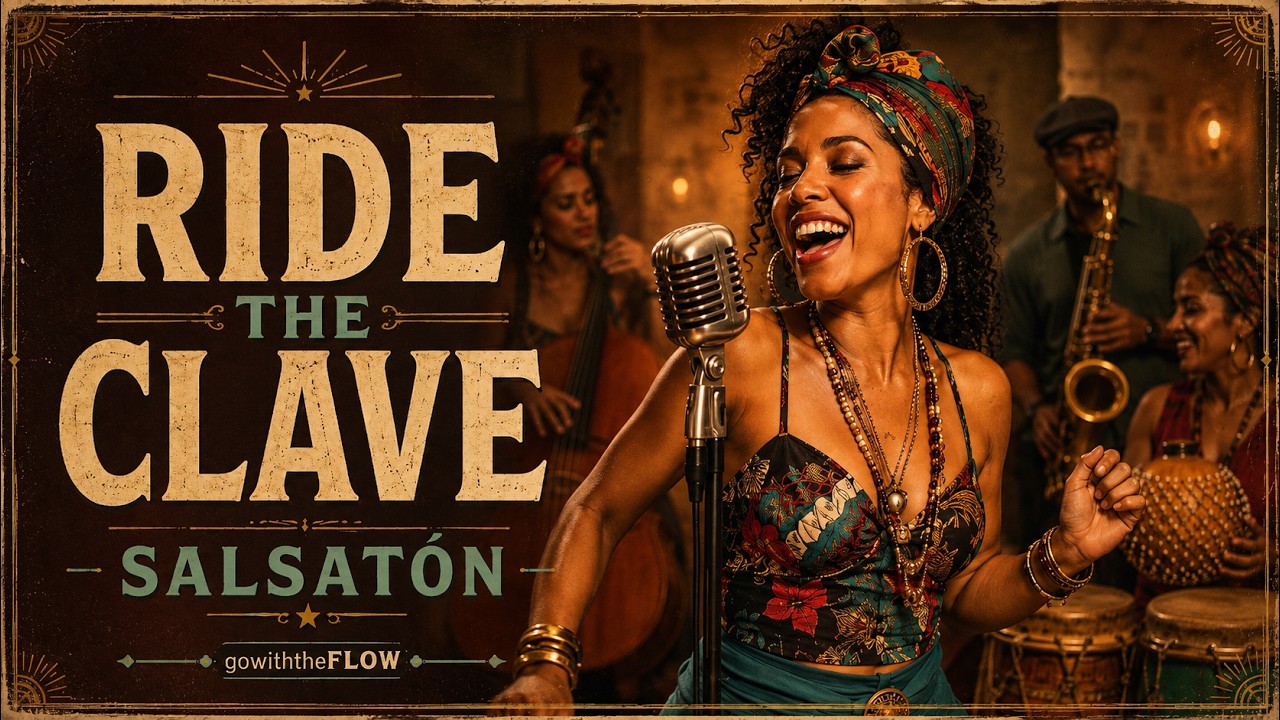
- Modern Latin urban production, including the salsaton material on this channel, uses bata cycles and rumba quinto phrasing to keep a programmed track from sounding mechanical.
Listening to percussion only music
Instrumental Afro-Cuban percussion mixes ask something different of the listener than melodic music does. There is no chord change telling you where you are. The structure is in the density and in the conversation between the lead drum and the ensemble. A useful approach is to pick one of the supporting parts, usually the lowest drum, and hold onto it while the quinto moves around on top. Once that is stable, the improvisation stops sounding like noise and starts sounding like speech.
It is also, for many people, unexpectedly good work music, because there is no melody to hum along to and no lyric to follow, only a steady and intricate floor.
Mix notes in this family
Latin Salsa Tropical Mix: what the tribal salsa label actually describes
The tribal salsa sound explained: bata derived cycles under a salsa arrangement, why it suits a bar at half volume, and what to listen for in the percussion.
Ritmos de Rumba y Salsa: guaguanco, tribal drums and where the quinto goes
How a rumba and salsa percussion mix works: the three conga roles in guaguanco, what the quinto is improvising against, and how folkloric drumming feeds a salsa arrangement.
Cha-cha-cha: the danzon that slowed down until dancers could hear their own feet
Where cha-cha-cha came from, how it grew out of the danzon-mambo through Enrique Jorrin's work, why the name is onomatopoeic, and what the guiro and piano are doing.
Son cubano: the tres, the anticipated bass and the form everything else grew from
Son cubano explained: the tres guitar and its three doubled courses, the anticipated bass, the bongo martillo, and how the son montuno structure became the basis of salsa.
Guajeo: the interlocking figure that makes Cuban music move
What a guajeo is, how the tres plays interlocking figures against the clave, how the piano montuno inherited the role, and why these patterns feel like they are turning over.
Changui, son and the road from Guantanamo to the world
Where son cubano came from: changui in the Guantanamo region, the marimbula, the move west to Havana, and how a rural form became a national and then international music.
Frequently asked questions
Is Cuban rumba the same as the ballroom rumba?
No. Ballroom rumba is a slow partner dance developed abroad from the Cuban bolero-son. Cuban rumba is a fast drum and voice tradition with three forms, yambu, guaguanco and columbia, and no melodic instruments.
What are bata drums used for?
The bata trio carries the sacred repertoire associated with Santeria, where each rhythm belongs to a specific orisha and the drums function as a language. The same drums and patterns are also used in secular and popular music.
What is guaguanco?
The best known form of Cuban rumba: medium to fast, played on three congas with the highest drum improvising, sung in call and response, and danced as a courtship game between a couple.
Why does Afro-Cuban music feel like it changes speed when it does not?
Much of it lives in a twelve pulse cycle that can be heard either as four groups of three or three groups of four. When your ear switches between those readings the music seems to turn over, although the tempo has not moved.
Do I need to know the religious context to enjoy it?
No. Much of the repertoire is entirely secular, including all of rumba. Knowing that the bata repertoire is liturgical does explain why those rhythms are fixed and why they are played in a set order.