Latin Salsa Tropical Mix: what the tribal salsa label actually describes
The tribal salsa sound explained: bata derived cycles under a salsa arrangement, why it suits a bar at half volume, and what to listen for in the percussion.
Tribal salsa is a production style, not a Cuban genre. It takes a conventional salsa arrangement and replaces some of the conga tumbao with folkloric cycles derived from bata and rumba playing, then mixes the percussion forward. The result reads as salsa but feels older underneath.
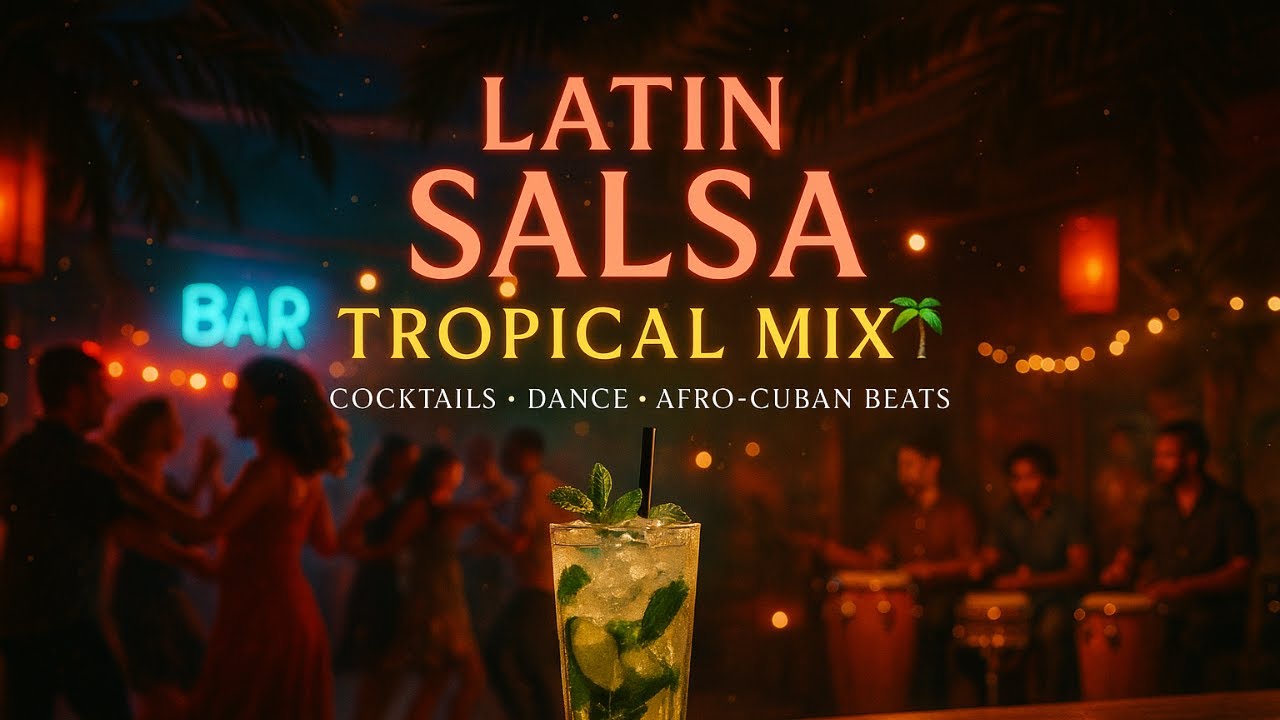
What tribal means here
No Cuban musician would describe a rhythm as tribal salsa in a rehearsal. The phrase belongs to the world of production and playlist naming, and what it usually points at is real enough: a salsa arrangement in which the percussion has been pushed towards the folkloric repertoire. Instead of a straightforward conga tumbao holding the floor, you get layered hand drums playing cycles that come out of rumba and bata practice, often in a six eight feel underneath a four four horn part.
That combination is what gives this kind of mix its particular pull. The top of the arrangement behaves like dance band salsa, with a montuno and stacked brass. The bottom behaves like a drumming circle. Your ear can follow either one.
Why it works in a bar at half volume
Long form percussion heavy salsa is unusually forgiving of a room's acoustics. Brass loses definition quickly in a reverberant space with hard surfaces, but hand drums keep their transient edge, so the groove survives being played quietly across a room full of conversation. That is the practical reason this material turns up in bars, lounges and cocktail settings rather than the smoother Latin jazz you might expect.
The other reason is dynamic range. A mix built on continuous percussion has very little distance between its quietest and loudest moments, so nobody has to reach for the volume control when a horn section arrives.
What to listen for
Pick out the lowest drum first and hold onto it. In a conventional salsa track that part is the conga playing open tones on the fourth beat. In a tribal salsa arrangement it is often a larger drum playing a longer cycle that takes two or four bars to come round. Once you have found it, the smaller drums stop sounding like decoration and start sounding like answers.
Then find the bell. Whether it is a timbale bell, a campana or a folkloric hand bell, it is the timeline, and everything else in the arrangement is measured against it.
Where it sits
If you want the tradition this borrows from, the Afro-Cuban guide covers rumba, the bata trio and the six eight bell. If you want the arranging language on top, the salsa guide covers clave direction, the montuno and the mambo section.
The Latin Salsa Tropical Mix playlist page covers when to put this on rather than what it is.